Download the Conference Proceedings
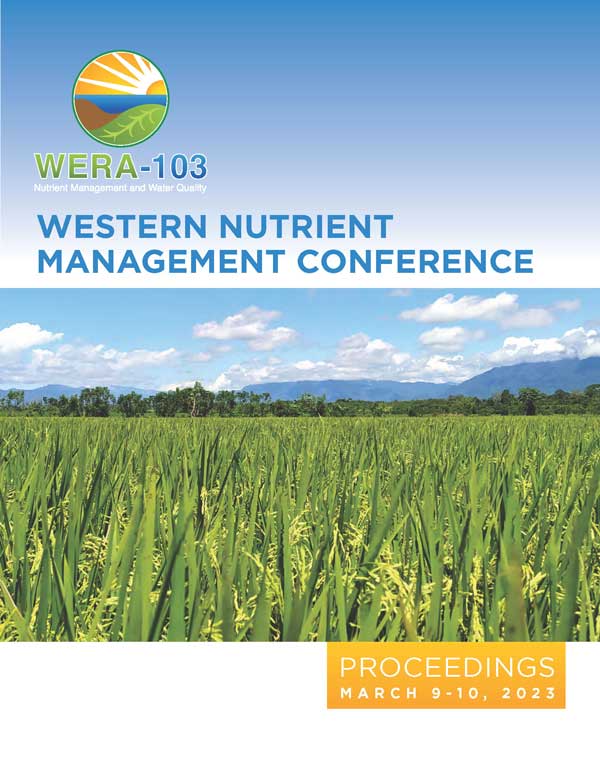
Proceedings
Authors
| Filter results36 paper(s) found. |
|---|
1. Evaluating Nutrient Uptake and Partitioning for Hybrid Carrot Seed Production in Central OregonHybrid carrot seed production is prominent in Central Oregon, however plant nutrient uptake dynamics in this crop are not well understood. The aim of this research was to evaluate nutrient uptake and partitioning during the production cycle of a modern Nantes-type hybrid carrot. Trials were conducted in two commercial carrot seed production fields planted to ‘Nantes 969’. Below- and above-ground plant biomass was destructively sampled and separated into roots, tops, and umbels throughout... E. Jeliazkova, A. Moore, J. Spring, T. Wilson |
2. Soil Health and Ecological Resilience on the PalouseHealthy soil is critical for global food security and other essential ecosystem services but is threatened by processes of soil degradation, with at least 33% of global croplands estimated to be moderately or highly degraded. Current soil health assessments provide insight into soil functional performance but often lack diagnostic criteria that assess management effects on soil function over time. We integrate soil health assessments with ecological resilience theory to better understand management... A.G. Davis, D.R. Huggins, J.P. Reganold |
3. Refining Nitrogen Management for Organic Broccoli ProductionSpecialty organic fertilizers used in organic vegetable production are expensive. So, from environmental and economic perspectives, growers want to maximize nitrogen (N) fertilizer use efficiency by the crop. This research was conducted to (1) determine sufficient N fertilizer rates for organic broccoli, (2) evaluate the efficacy of a specialty organic fertilizer (feather meal; 12-0-0), and (3) confirm the effectiveness of midseason soil nitrate analyses (0-30 cm) in determining appropriate sidedress... D. Sullivan, R.E. Peachey, A. Donaldson |
4. Phytosiderophore Exudation from the Roots of Iron Stressed Kentucky BluegrassSome Kentucky bluegrass (Poa pratensis L., KBG) cultivars are susceptible to iron (Fe) deficiency chlorosis when grown on calcareous soils and are routinely treated with Fe fertilizers. Aesthetics could be improved and this costly practice could potentially be eliminated with the use of cultivars resistant to Fe deficiency. Grasses are known to release phytosiderophore into the rhizosphere to dissolve Fe for plant use, and this characteristic has been used to screen for resistant... B. Hopkins, E. Buxton, V. Jolley, R. Christensen |
5. Emissions of Ammonia and Greenhouse Gasses from Dairy Production Facilities in Southern IdahoIdaho is one of the top three milk producing states in the United States. While this commodity group is a very valuable part of the economy, there is concern over the impact of these production facilities on the generation of ammonia (NH3) and greenhouse gases (methane, CH4 and nitrous oxide, N2O) which are linked to air quality degradation and global warming. To gain a better understanding of the on-farm emissions from these production facilities, we monitored both cattle housing and manure... A.B. Leytem, D. Bjorneberg, R.S. Dungan |
6. K Fixation and Significance for Crop ProductionSome cultivated soils in California found on the east side of the San Joaquin Valley (SJV) and derived from granitic parent material have the capacity to fix added K, making it unavailable or less available to crops. The main soil mineral responsible for K fixation is vermiculite, which is a weathering product of mica, and which can occur in the clay, silt, and fine-sand size fractions. We have developed a model that predicts the location of K-fixing soils in the region and a practical soil test... S. Pettygrove, T. O'geen, R. Southard |
7. Phosphorus and Organic Acid Bonding Enhances Uptake Efficiency in Crop PlantsPhosphorus (P) fertilizer is essential for crop production, but reductions are warranted to conserve resources and minimize environmental impacts. Several lab, glasshouse, growth chamber, and field studies have been performed over the past five years with a new P fertilizer (Carbond P; CBP; Land View Fertilizer, Rupert, ID, USA) in calcareous, low OM soil. This presentation will be a review of that data. Studies comparing CBP to ammonium polyphosphate (APP) applied to soil show season-long increases... B. Hopkins, T. Blair, M. Hill, C. Ransom |
8. Drinking Water Nitrate and Irrigated Agriculture in CaliforniaNitrate contamination of groundwater in California has led to new government regulation of agricultural practices in the state’s Central Valley (CV) and Central Coast Regions (CC, which includes the Salinas Valley). Regulations in 2007 were imposed on dairies in the Central Valley, but more recently, all irrigated farming in both regions has been targeted. These regulations require monitoring and reporting (e.g., of fertilizer and manure applications), nutrient management plans, and adherence... S. Pettygrove |
9. Polymer Coated Urea (Duration) in Turfgrass: Impacts on Mowing, Visual, and Loss to EnvironmentFall and spring applied N fertilizer trials were conducted over two years in an effort to determine if various slow and controlled release N fertilizers were equivalent to traditional urea and to determine if a reduced rate of controlled release N could be used for improved N use efficiency. An unfertilized control was compared to sulfur coated urea (SCU), polymer and sulfur coated urea (XCU), polymer coated urea (Duration 75 or 125; DR) at 50, 75, and 100% (full) rate, and urea either applied... B. Hopkins, L. Sutton, C. Ransom, T. Blair, J. Moody, K. Manning, S. Bergsten |
10. Phosphorus and Organic Acid Bonding Impacts at Varying Soil pHPhosphorus (P) fertilizer is essential for crop production, but reductions are warranted to conserve resources and minimize environmental impacts. Several lab, glasshouse, growth chamber, and field studies have been performed over the past six years with a new P fertilizer (Carbond P; CBP; Land View Fertilizer, Rupert, ID, USA) mostly in calcareous, low OM soil. Studies comparing CBP to ammonium polyphosphate (APP) and monoammonium phosphate (MAP) applied to soil show season-long increases in... T. Blair, C. Ransom, P. Hosford, J. Svedin, L. Sutton, A. Winchester, K. Manning, T. Hopkins, B. Hopkins |
11. Alfalfa Contributes More Nitrogen to Following Crop Than Previously ThoughtAlfalfa in high-yielding environments fixes significant amounts of atmospheric N2, a portion of which benefits succeeding non-legume crops and reduces fertilizer N requirement by an amount sometimes called the “legume N credit”. Field research-based estimates of the legume N credit in California and other irrigated, semi-arid or arid environments are sparse in the literature. We conducted replicated plot experiments at three field station sites in California using wheat as an indicator... S. Pettygrove, E. Lin, D. Putnam, M. Lundy, S. Orloff, S. Wright |
12. Effects of Post-fire Soil Hydrophobicity on Inorganic Soil Nitrogen and Sulfur CyclingFire plays an important role in many native ecosystems, and its suppression has increased woody encroachment across the globe. Restoring native herbaceous communities following fire in encroached systems is often challenging. Post-fire soil hydrophobicity is one factor that may further limit site restoration by limiting soil moisture, which may in turn affect soil nutrient dynamics. We conducted a field study in a burned pinion-juniper woodland to understand the effects of post- fire soil hydrophobicity... B. Hopkins, K. Fernelius, M. Madsen, K. Russell, B. Roundy |
13. Turf Response to Reduced Rates of Polymer-coated UreaPolymer-coated urea (PCU) is a controlled-release fertilizer which can enhance nitrogen (N) use efficiency (NUE), reduce N pollution, reduce the need for repeated fertilizer applications, and reduce turfgrass shoot growth and associated costs. A PCU fertilizer rated for 120 d was applied at 50, 75, and 100% of the recommended full rate and compared to an unfertilized control and urea, applied either all at once or split monthly at the full recommended rate. Spring applied PCU showed no initial... B. Hopkins, C. Ransom, M. Ruth, T. Blair, L. Sutton, D. Bradshaw, K. Campbell |
14. Phosphorus and Organic Acid Bonding Enhances Uptake Efficiency and Yield Response in Crop PlantsPhosphorus (P) fertilizer is essential for crop production, but reductions are warranted to conserve resources and minimize environmental impacts. Several lab, glasshouse, growth chamber, and field studies have been performed over the past seven years with a new P fertilizer (Carbond P; CBP; Land View Fertilizer, Rupert, ID, USA) in calcareous, low OM soil. This paper will be a review of a portion of that data. Studies comparing CBP to ammonium polyphosphate (APP) and monoammonium phosphate (MAP)... B. Hopkins, T. Blair, J. Selman, C. Ransom, T. Hopkins |
15. Evaluation of Nitrogen Gas Loss from Polymer Coated and Polymer Sulfur Coated UreaPrevious research showed reduced nitrogen (N) gas emissions from polymer coated (PCU) and polymer sulfur coated urea (PSCU) when surface applied to soil. To further verify and quantify (N) loss, experiments were conducted to measure N gas emissions. Fertilizer prills were surface applied in a semi enclosed system to allow atmospheric gases in but to prevent loss of N gases from the headspace. Nitrous oxide (N2O) and ammonia (NH3) emissions were continuously measured every 20 minutes using photoacoustic... B. Hopkins, J. Svedin, C. Ransom, J. Buss, T. Blair |
16. Digital Tools to Improve Sustainable Agriculture PracticesVisualizations have been shown to promote learning and understanding and to aid in analysis and problem solving. Many concepts in agriculture are well suited to demonstrations that are used in classroom settings or part of training events. However, many demonstrations are difficult to seed in a large setting, or take more time than can be allotted. A series of demonstrations were either filmed or created in animation to provide a digital means by which trainers could more easily train their students,... R. Flynn, J. Walworth, J. Davenport, A. Ulery, D. Bloedel, J. Gleason |
17. Nitrogen and Irrigation Water Interactions in Drought Stressed Kentucky BluegrassThere is increasing pressure in arid regions to conserve water, especially during drought. Turfgrass is the irrigated crop of greatest acreage in the United States and water use for irrigating turf is coming under scrutiny in urban ecosystems. The purpose of this study was to evaluate water use and growth of Kentucky bluegrass (Poa pratensis L.) under various irrigation and nitrogen (N) regimes. A study was conducted in an environmentally controlled growth chamber with established Kentucky... K. Russell, A. Hopkins, N. Hansen, B. Hopkins |
18. Evaluating and Revising Guidelines for Blueberry Tissue Nutrient Standards in WashingtonLeaf tissue nutrient analysis is frequently used in perennial fruit crops to develop nutrient management plans. In blueberry, samples historically are collected between 15 July - 15 August and the results are used for planning nutrient management the next growing season. Northern highbush blueberry tissue nutrient standards were initially developed by Michigan State University and have recently been revised for western Oregon. However, the proliferation of blueberry production... J. Davenport, L. Devetter |
19. Soil Acidification: Identification, Prevention, Adaptation and RestorationLow soil pH is becoming far more common in Montana soils, with at least 23 counties having at least one field with pH less than 5.5. Soil pH levels in the top 6 inches as low as 3.8 have been measured, resulting in complete crop failure insome locations, yet the problem is highly variable across fields and within soil profiles. Nitrogen fertilizer rates applied above crop nitrogen needs are the largest cause of the acidification. Low soil pH should be verified before managementpractices... C. Jones, R. Engel, S. Ewing, P. Miller, K. Olson-rutz |
20. Phosphorus Efficiencies of Liquid P Fertilizers as Evidenced by P Adsorption Isotherms of Western Calcareous SoilsThe high levels of free lime or calcium carbonate (CaCO3) in arid Western U.S.A. soils reacts with phosphorus (P) fertilizers to form Ca-P minerals that are not available to plants through P fixation. Enhanced efficiency P fertilizers may potential decrease P fixation. The objective of this study was to identify P fixations levels associated with several enhanced efficiency P fertilizers on a basic soil (pH 8.03) over a 1-, 3-, and 7-day time period, and to use that data to adjust P fertilizer... J. Williams, S. Davis, K. Dabbs |
21. Integrating Cover Crops and Livestock into Irrigated Cropping SystemsIntensive annual cropping consisting of barley-sugar beet rotations in irrigated systems could benefit from integration of cover crops and livestock. This research is being conducted on the University of Wyoming Research Station in Powell, WY, and on six farms in the surrounding area. This area has a short growing season and integrating cover crops into the cropping system is difficult. This study examines the implementation of cover crops after mid-summer barley harvest and... T. Bush |
22. Nitrogen Management in Small Grains After AlfalfaSmall grains are commonly grown following alfalfa in Utah and the Intermountain West, especially during drought years as small grains require less irrigation than corn. Several studies across the country have shown that corn following alfalfa rarely needs N fertilizer, yet relatively few have evaluated the N needs of small grains. Furthermore, research on the N needs of small grains grown as forage vs. grain are even more sparse. The objectives of this research are to quantify the... C. Pound, M. Yost, E. Creech, G. Cardon, K. Russell, D. Despain, J. Gale, K. Heaton, B. Kitchen, M. Pace, S. Price, C. Reid, M. Palmer, M. Nelson |
23. Soil Health in American Sports Fields and Golf CoursesHealthy soils are essential for sustaining the world’s ecosystems and maintaining human lifestyles. The adoption of biological, chemical, and physical analyses to assess soil health is a relatively new concept with a paucity of scientific work assessing how well these tests can predict and influence soil health. Golf and sports turf are arguably the most intensively managed soil systems in the world, including fertilizer and pesticide use. Excess fertilizer and pesticide application can... M. Barnes, B.G. Hopkins |
24. Performance of Public and Private Fertilizer Recommendations for Corn, Alfalfa, and Small GrainsThere are many sources that growers utilize to determine fertilizer needs for crops such as private and public labs, crop advisors, and fertilizer dealers. In many cases, these sources provide recommendations for a specific crop that can vary greatly, and the resulting fertilizer and application rates recommended can lead to large differences in costs for the grower. Evaluating the effectiveness and economics of current fertilizer guidelines and recommendations will help growers to make better-informed... M. Yost, M. Baker, J. Gale, E. Creech, G. Cardon |
25. Evaluating Zinc Requirements of Corn, Small Grains, and AlfalfaMany growers and crop advisors in the Intermountain west have recently reported Zn deficiencies in major cereal and forage crops. Further, many common fertilizer blends now include Zn. Most Zn fertilizer guidelines indicate that 5-10 lbs of Zn per acre should be applied when critical soil test Zn levels are less than about 0.8 ppm Zn. These guidelines in Utah and many other states in the region were developed decades ago and need to be reassessed. Therefore, we established Zn response and rate... M. Yost, M. Baker, J. Gale, G. Cardon, E. Creech |
26. Stacking 4R Nutrient Management: PotatoThe 4Rs of nutrient management are research-based guidelines with the aim to improve the sustainability of major cropping systems and the environment without compromising crop yield and quality. The term “4R” represents fertilizer applied at the Right rate with the Right source, Right timing, and Right placement. The objective of this project is to evaluate the interactions of individual and combined 4R management practices. In 2020, potato (Solanum tuberosum L.) was grown... S.H. Stapley, C.C. Whitaker, N.C. Hansen, R.C. Christensen, R.R. Jensen, M.A. Yost, B.G. Hopkins |
27. Impact of Variable-Rate Nitrogen on Potato Yield, Quality, and ProfitNitrogen application in agriculture is a vital process for optimal plant growth and yield outcomes. Factors such as: topography, soil properties, historical yield, and crop stress variably affect nitrogen (N) needs within a field. Applying variable N within a field could improve yields and nitrogen use efficiency (NUE). Optimal N management is a system that involves applying a conservative variable base rate at or shortly after planting followed by in-season assessment and, if needed, variable... E.A. Flint, M. Yost, B. Hopkins |
28. Irrigation Management and Drought-tolerant Genetics on Nutrient UptakeAlfalfa is exceptional at obtaining nutrients from the soil with its deep tap root. However, with its ability to consume vast amounts of phosphorous and potassium more is used than what is made available each year. This results in the need of nutrient management plans. With the continuing of the drought, nutrient management becomes more difficult. Irrigation management, drought tolerant genetics, and sprinkler technology can play an important role in nutrient management and affect financial outcomes... D. Boren, M. Yost, T. Sullivan |
29. Nutrient Management for Semi-arid Cannabis ProductionThe industrial hemp (Cannabis sativa L.) industry rapidly emerged in Utah in 2019 with nearly 480 new hectares of hemp production. Production declined and stabilized during 2019-2022 due to low returns in a flooded pharmaceutical market. Though small and specialized, the hemp production industry is still viable in Utah and surrounding states. Many questions remain on optimal production practices for this new and potentially high-value crop. Research throughout the United States... T. Sullivan, M. Yost, D. Boren, E. Creech, B. Bugbee |
30. Dairy Manure Applications to Potatoes: Soil Property, Plant Nutrient, and Tuber Quality ResponseDairy manure applications have become a common practice in Idaho potato production, however the impacts on soil and plant agronomic properties are not well understood. Our objectives were to determine (1) how repeated dairy manure applications impact soil properties and plant nutrient uptake, and (2) how these changes influence plant nutrient interactions, tuber yield, and quality. Stockpiled dairy manure was fall-applied over a 6-year period to two adjacent potato production... A. Moore, A.B. Leytem |
31. Predicting Nitrogen Mineralization from Dairy Manure in Semiarid Cropping SystemsTools are needed to estimate N mineralization from application of dairy manures in semiarid irrigated soils. We found that N mineralization was affected by manure application rate, timing and broadleaft residue N. Average N mineralization was 27 and 18% of the N applied the 1st and 2nd year following application, respectively. The best predictors of N mineralization were soil organic matter, soil EC, manure N and broadleaf N residue. ... A.B. Leytem |
32. N Fertilizer, Does It Burn Up Organic Matter?Does synthetic N fertilizer deplete soil organic carbon, thereby exacerbating agricultural contributions to climate change? Or does synthetic N fertilizer instead increase soil organic carbon by boosting primary productivity and soil carbon inputs? The bulk of the evidence suggests that soil organic carbon increases with synthetic N fertilizer due to increased carbon inputs and decreased microbial mineralization of older soil organic carbon. ... G. Lahue |
33. Ammonia Recovery from Anaerobically Digested Dairy Wastewater Facilitated by In-situ Acid and Base Generation in a Transmembrane Electro-chemisorption SystemNitrogen (N) is essential for living organisms and is a critical element in agricultural production. Ammonia (NH₃), a vital component in the nitrogen cycle, can be produced naturally by nitrogen-fixing bacteria or artificially through the energy-intensive Haber-Bosch process. Anaerobically digested dairy wastewater (ADDW) could contain high concentrations of ammonia nitrogen (NH3-N) due to the conversion of organic N into NH3-N during the anaerobic digestion process. Ammonia... A.K. Das, L. Chen |
34. Effect of 4R Nitrogen Management on Residual Soil Nitrate and Soil HealthNitrogen is one of the most important and expensive inputs for forage, grain, vegetable, and fruit crops. Excessive fertilizer reduces profit for farmers and can cause environmental harm. Nitrate leaching is the main factor contributing to rising nitrate levels in groundwater, leading to water quality degradation. The 4R nutrient stewardship framework aims to optimize fertilizer management. The Right rate matches the amount of fertilizer to the crop needs, the Right source matches fertilizer type... K. Deep, M. Yost, J. Williams, B. Hopkins, G. Cardon, B. Black |
35. On-Farm Variable-Rate Nitrogen Management in PotatoApplying variable nitrogen (N) has often improved yields, quality, and/or N use efficiency (NUE) of several crops. The objective of this study was to evaluate how pre-emergence variable rate N (VRN) zones vs. uniform N management impacts potato (Solanum tuberosum L.) yield, quality, and NUE. Low, average, and high N zones were created and evaluated for 10 site-years at fields near Grace, Idaho, USA over two years with rates based upon yield goals, soil, water, and previous crop information.... E. Flint, M. Yost, B. Hopkins |
36. Spectral Response of Pulse Crops to Soil Acidity for Soil pH MappingIn this work, we explore the observable differences in the spectral reflectance of pulse crops in acidified and non-acidified soil regions of multiple Montana fields. Satellite observations are collected throughout the growing season using Landsat 8 & 9 and Sentinel 2 A & B. The variations of crop reflectance in acidified (pH < 5) and non-acidified (pH 6.0 to 7.0) are analyzed and used to support why both multi-temporal regression and machine learning models are... P. Nugent, S. Feleghari |