Download the Conference Proceedings
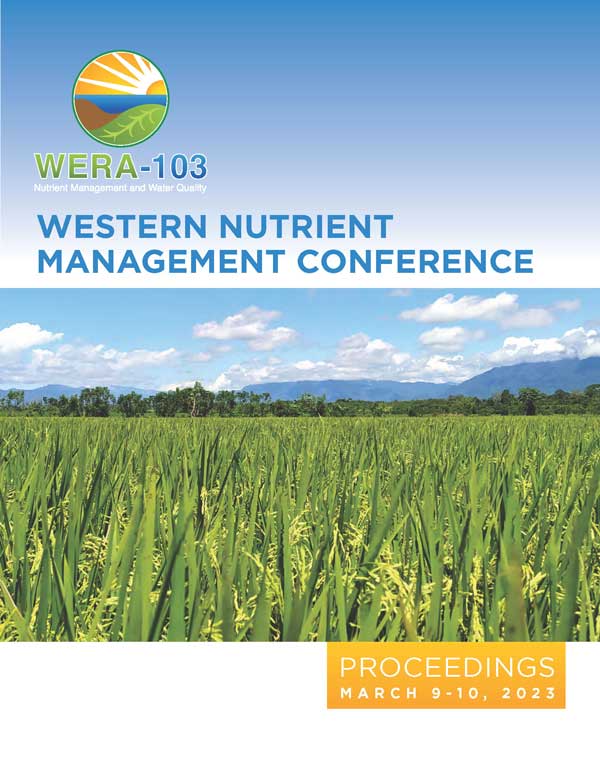
Proceedings
Authors
| Filter results22 paper(s) found. |
|---|
1. Repurposing Zinc from Mining Tire Waste to a Fertilizer ResourceZinc (Zn) deficiency is common on high pH soils when growing field crops like Corn, Barley and Wheat. Not only are crop yields and quality limited by low Zn, but more importantly the dilution of Zn in food stuffs and, thereby, Zn deficiency in the human diet has become a major concern as recognized by the World Health Organization. At the same time, there is a Global problem in proper repurposing/disposal of used tires that contain between 1-3% ZnO. In fact, in Chile, the... K. Greer, J. Wiebe, E. Bremer |
2. Factors Influencing Efficacy of Elemental Sulphur FertilizersElemental sulfur is a byproduct of fossil fuel production and produced in large quantities in both the US and Canada. Fertilizers containing elemental S have a high S content and low manufacturing cost, but may not reliably meet crop requirements for S in the year of application due to the time required for elemental S to be oxidized. The main factors influencing the oxidation rate of elemental S are particle size, particle dispersion and environmental conditions. Previous... E. Bremer |
3. Phosphorus and Zinc Interactions in PotatoPotato production requires high soil phosphorus (P) application with potential negative environmental and nutrient uptake effects. Impacts of high available P on species in potato cropping rotations are not adequately understood, nor have the causes of reduced yield and quality from excess P been fully explored. Antagonistic interactions with cationic micronutrients such as zinc (Zn) are plausible explanations. Two hydroponic experiments were conducted with Burbank potato to elucidate P and Zn... B. Webb, B. Hopkins, J. Ellsworth, S. Barben, B. Nichols, V. Jolley |
4. Spatial and Temporal Variability in Wine Grape NutrientsLittle work has been done to address the extent of spatial and temporal variability in nutrients in wine grape vineyards. In this study, we assessed soil and plant nutrient distribution on a per vine basis, both spatially and temporally across two vineyards, a Ruby Cabernet vineyard in Sunraysia and a Cabernet Sauvignon vineyard in Coonawarra. Petiole tissue was collected at two growth stages: flowering and veraison. Berry tissue was collected at harvest. All samples were analyzed for the plant... J. Davenport, R. Bramley |
5. Non-destructive Measurement of Perennial Crop N StatusLittle research has been conducted to evaluate the use on hand-held leaf meters as tools to assess plant N status in perennial crops. In this study, using replicated N rate plots in place for up to four years, we used two hand-held leaf meters (the Minolta SPAD meter and the Field Spec CM1000) to monitor tissue N status in apple and one meter (CM1000 only) in wine grape. In both crops, relationships were found between leaf meter readings and both fertilizer N rate as well as tissue N concentration.... J. Davenport, R. Stevens, E. Perry |
6. Boron Fertilization in PotatoThe high value of potato (Solanum tuberosum L.), its inefficient rooting system and the low organic matter content of sandy soils on which potatoes are cultivated result in widespread application of boron (B) and other micronutrients. However, in times of cost trimming, B may become an omitted input regardless of soil test values. Further, soil tests for B may need to be updated for higher yields, better management or improved soil test methods. Russet Burbank potato was grown at... B. Webb, B. Hopkins, J. Ellsworth, V. Jolley, R. Callahan |
7. Organic Management Improves Soil Health and Strawberry Nutritive ValueSoils and strawberries from 13 matched pairs of organically and conventionally managed fields were assessed over two years. Available plant nutrients were generally similar under organic and conventional management except that organically managed soils contained more available Zn and B. Soil C, N, and biological parameters were much greater under organic management. Organically produced strawberries matched by variety were smaller and had greater dry matter content than conventionally produced... L. Carpenter-boggs, J. Reganold, J. Reeve, P. Andrews |
8. Cover Crops for Nitrogen Management in Irrigated Cropping SystemIn perennial fruit cropping systems, the inter-row offers on opportunity to grow a cover crop that then can be used to supply nitrogen (N) to the fruit crop. We conducted research in both Concord grape and Gala apple to evaluate the potential of cover crops to supply N to the crop. Based on continuous monitoring of plant available NO3-N by using PRSTM ion exchange resin probes, we found that in Concord grape, while both hairy vetch and yellow sweet clover did not release quite as much N as... J. Davenport, K. Bair, D. Granastein |
9. Differences in How Late Season Soil Vs. Foliar Nitrogen Fertilizer Supplements Affects Riesling YanDuring the 2011 and 2012 growing seasons, 0, 15, or 30 lbs/A N was applied in split applications as either soil (simulated drip) or foliar applications to a commercial Riesling vineyard with a history of low vine N. Each treatment was replicated 4 times. To assess the impact of the supplemental N applications on vine vigor, shoot lengths were measured weekly and pruning weights collected during the dormant season (2012/2013 pruning not yet conducted). Fruit was harvested within 2 days of commercial... J. Davenport, M. Mccoy |
10. Seasonal Water Distribution in a Drip-irrigated Cabernet Sauvignon VineyardSeasonal irrigation is vital to sustainable production of wine grapes in inland Washington. Without supplemental irrigation there is not enough rainfall during summer months to sustain plant health and productivity. Our 5 year project evaluates the effects of several regulated deficit irrigation treatments on soil water distribution throughout the growing season and the subsequent effects on yield and fruit quality in both Cabernet Sauvignon (CS) and Concord grapes; with a focus on wine grape... J. Davenport, J. Stout |
11. Siderophores to Increase Iron AvailabilitySiderophores are biologically produced low molecular weight amino acids that act to chelate metals. These can be generated by soil microorganisms and some plants, most notably grasses, also produce siderophores. These compounds are associated with improved availability of iron in the soil. This manuscript presents a survey of microbial siderophores present in soils under chlorotic and non- chlorotic ‘Concord’ grapevines. ... J. Davenport, A. Pollard, T. Sullivan |
12. Soil Water and Plant Canopy Sensor Technologies to Optimize Water and Nutrient UseIn many respects, agricultural technology is doing things now that were only imagined 20 to 30 years ago. Yet, grower tools that provide information and actionable knowledge on water and nutrient availability still remain a challenge. Clearly, rapid development of data transfer and processing platforms to date has provided rich maps of grower fields with overlays of location-specific information but their utility is still limited by our ability to accurately measure the parameters that are the... C. Campbell, N. Hansen, B. Hopkins, S. Evans, E. Campbell, A. Campbell, L. Rivera, D. Cobos |
13. Canola Roots of Water and Nitrogen Use Efficiency: New Lessons for PNW Wheat GrowersThe semi-arid inland Pacific Northwest (iPNW) has primarily produced wheat for 125 years due to favorable climate, soils, economics and policy drivers. Shifting drivers over the past decade related to energy, climate change, regional and global markets have created new opportunities for the integration of canola into iPNW wheat-dominated rotations. Traditional wheat grower mindsets required an agronomic reboot, forged by an understanding of canola vs. wheat physio morphology, an explosion of variety... W. Pan, T. Maaz, I. Madsen, W. Hammac, M. Reese |
14. Nutrient Lessons from Long-term Cropping System StudiesThe long-term efficiency of applied nutrients in agricultural soils depends not only on the efficiency of use by the immediate crop, but also on the efficiency of use for residual forms. However, determining this efficiency is difficult due to the slow turnover of residual forms, large soil nutrient reserves, and multiple processes controlling the fate and crop utilization of nutrients. Long-term cropping system studies are useful in this regard because they allow small changes to accumulate and... E. Bremer |
15. Application of Ion Exchange Resin Membranes to Nitrate Testing in the WestResin membranes have been used since the 1960s to measure P supply from the soil. In the 1990’s the Plant Root Simulator (PRS®) probe was invented to further refine a method to measure N mineralization from soil organic matter. The functional measurement of soil N supply during incubation has been applied to both in situ measures and in lab research studies. Extending the PRS® measurements of N ‘intensity’ or flux to a meaningful number that a plant can utilize was accomplished... K. Greer, E. Bremer, T. Sievers |
16. Digital Tools to Improve Sustainable Agriculture PracticesVisualizations have been shown to promote learning and understanding and to aid in analysis and problem solving. Many concepts in agriculture are well suited to demonstrations that are used in classroom settings or part of training events. However, many demonstrations are difficult to seed in a large setting, or take more time than can be allotted. A series of demonstrations were either filmed or created in animation to provide a digital means by which trainers could more easily train their students,... R. Flynn, J. Walworth, J. Davenport, A. Ulery, D. Bloedel, J. Gleason |
17. Cover Crops for Hop Production in Semi-arid ClimatesTilling interrows to control weeds is a common practice in hop production, especially in the Yakima Valley of Washington which receives 8 inches average annual precipitation and produces 74% of US hops. Dry, tilled interrows leaves topsoil prone to erosion and decreases soil organic matter over time. The goal of this three-year study is to determine cover crop species that would be profitable weed control alternatives to tillage for hop producers in semi-arid climates by providing ground cover,... S. Del Moro, J. Davenport, C. Jones |
18. Effects of a One-time Compost Addition on Soil Health in a Rainfed Dryland Organic Wheat SystemMaintaining adequate soil fertility and health is a challenge in dryland organic wheat systems. This research examines the short-term impact of a one-time addition of compost on the soil health in a rainfed dryland organic winter-wheat (Triticum aestivum L.) fallow system. Field plot experiments were established in 2015 in a semiarid dryland organic wheat field in Snowville, Utah with the following treatments: control (C), compost at 12.5 Mg/ha dry weight (CM1), 25 Mg/ha (CM2), 50 Mg/ha... I. Atoloye, J. Reeve, A. Jacobson, E. Creech |
19. Effect of Cover Crops and Compost on Soil Water Availability in Organic Dryland WheatIn low input semi-arid regions, water is the major limiting factor in crop production. Cover crop biomass and compost are good source of organic matter, that improve biological activity and water holding capacity of soils. However, dryland organic wheat growers rarely apply soil amendments due to cost and cover crops can lead to the depletion of soil water which decreases the yield of subsequent winter wheat. This study investigates the potential for a synergy between compost addition and cover... K. Adeleke, J. Reeve, E. Creech, I. Atoloye |
20. Evaluating and Revising Guidelines for Blueberry Tissue Nutrient Standards in WashingtonLeaf tissue nutrient analysis is frequently used in perennial fruit crops to develop nutrient management plans. In blueberry, samples historically are collected between 15 July - 15 August and the results are used for planning nutrient management the next growing season. Northern highbush blueberry tissue nutrient standards were initially developed by Michigan State University and have recently been revised for western Oregon. However, the proliferation of blueberry production... J. Davenport, L. Devetter |
21. Development of a Constrained Resource Model to Support Intercropping DecisionsCrop producers are interested in intercropping due to its’ potential to increase profitability, yield stability and sustainability. Our objective was to extend a simulation model to forecast crop yields (PRS® CropCaster®) to pulse-oilseed intercrops. This tool would provide crop producers with forecasts of yields of each crop component under different management and environmental conditions. Based on competition for fertilizer 15N... E. Bremer, I. Madsen, K. Greer |
22. Recovered Carbon Black from Pyrolyzed Tires as a Zinc Fertilizer for Field Corn in Calcareous SoilsWaste tires exist in immense quantities, representing a substantial pollution source containing a variety of environmentally concerning components, including the heavy metal zinc (Zn) added as Zn oxide (ZnO) during tire manufacture. Pyrolysis under high vacuum is a potential disposal solution. One of the by-products of this process is recovered Carbon Black (CB) that is enriched in Zn, an essential plant nutrient. Our objective was to determine if recovered CB from can serve as a fertilizer Zn... R.E. Sannar, E. Bremer, K. Greer, B. Hopkins |